
2025 2nd International Conference on Artificial Intelligence and Digital Management (ICAIDM 2025)
Keynote Speakers
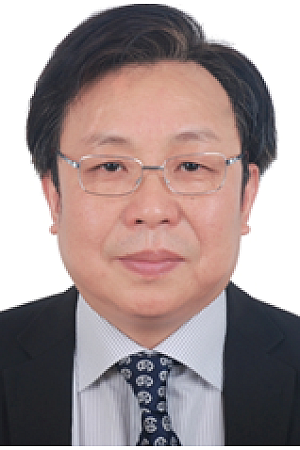
Prof. Jianmin Zhang
Hangzhou Dianzi University, China
Experience: Professor Zhang Jianmin, male, is currently a professor and doctoral and master's supervisor in the Department of Electrical Power Engineering at Huazhong University of Science and Technology. He obtained his bachelor's and master's degrees from Huazhong University of Science and Technology, and later received his engineering master's degree from the Indian Institute of Technology Roorkee. He serves as the head of the Electric Power Systems and Automation direction in the Electrical Engineering discipline, deputy director of the Zhejiang Provincial Engineering Laboratory for Regional Energy Internet Technology, and director of the Smart Grid Information Engineering Laboratory.
Professor Zhang is a Senior Member of IEEE and actively participates in the IEEE PES Smart Grid and New Technologies Committee and the Power System Communication and Cybersecurity Committee. He is also a council member of the Zhejiang Electric Power Society and a member of the Innovation and Entrepreneurship Consulting Expert Committee of State Grid Zhejiang Electric Power Company.
Since 1987, he has worked at various organizations, including the Rural Electrification Research Institute of the Ministry of Water Resources, where he served as the head of the Power Grid Division and the Electromechanical Division, and held positions such as Deputy Chief Engineer of Zheda Kawaii and Chief Engineer of Shenzhen Guodian Information Technology Co., Ltd. He joined Hangzhou Dianzi University in 2001 and was promoted to professor in December 2004. He has since received one provincial and ministerial science and technology progress award and three third prizes, and has led multiple national and provincial research projects.
Professor Zhang has compiled national and industry standards, published over 130 papers, including 48 in top domestic journals, and has trained 54 master's students.
Prof. Azlan Mohd Zain
Universiti Teknologi Malaysia, Malaysia
Experience: Azlan Mohd Zain (Member, IEEE) received the master’s degree in science (productivity and quality improvement) from Universiti Kebangsaan Malaysia (UKM) and the Ph.D. degree in computer science from Universiti Teknologi Malaysia (UTM), in 2010. He is currently a Professor with the Faculty of Engineering, School of Computing, UTM. He is also the Director of the UTM Big Data Research Centre. As an academic staff, he has successfully supervised more than 25 postgraduate students and received more than 20 research grant funding to support research students. He has published more than 100 research papers. He has been invited as keynote speaker at over five international conferences, serves on numerous committees, and has served on editorial board for three international journals.
so a council member of the Zhejiang Electric Power Society and a member of the Innovation and Entrepreneurship Consulting Expert Committee of State Grid Zhejiang Electric Power Company.
Since 1987, he has worked at various organizations, including the Rural Electrification Research Institute of the Ministry of Water Resources, where he served as the head of the Power Grid Division and the Electromechanical Division, and held positions such as Deputy Chief Engineer of Zheda Kawaii and Chief Engineer of Shenzhen Guodian Information Technology Co., Ltd. He joined Hangzhou Dianzi University in 2001 and was promoted to professor in December 2004. He has since received one provincial and ministerial science and technology progress award and three third prizes, and has led multiple national and provincial research projects.
Professor Zhang has compiled national and industry standards, published over 130 papers, including 48 in top domestic journals, and has trained 54 master's students.

Assoc. Prof. Dr. Sameer Kumar
Universiti Malaya, Malaysia
Experience: Dr. Sameer Kumar has a PhD in Social Networking and is presently working as Associate Professor at Asia-Europe Institute, University of Malaya. He has over two decades of work experience in the industry and academia and also holds a PMP® (Project Management Professional) certification from PMI, USA. He has been regularly listed in the Stanford University top 2% world scientist list from 2021 to 2024. At Asia-Europe Institute (AEI) Dr. Sameer teaches Masters level courses on Information Technology, Business and Asia-Europe studies. He has been the Program Coordinator for International Masters in Information Management (2014 - 20 16) and is currently the Programme Co-ordinator for International Masters in ASEAN Studies program (2016-2025) In 2015 he was the visiting scientist at Ilmenau University of Technology, Germany. He was also a key member and co-ordinator of the Jean Monnet center of excellence (2017-2021). He has managed funded projects, extensively published in top-tier journals and has been in panels in several international foras. He regularly reviews for top ISI Web of Science journals and supervises candidates at both Masters and PhD levels.
Title: Asymmetries in Artificial Intelligence Readiness across ASEAN: A Multivariate and Cluster-Based Comparative Analysis
Abstract: Artificial intelligence (AI) is reshaping industries worldwide, and ASEAN is no exception. The rapid adoption in the region promises efficiency and growth, but this analysis reveals stark asymmetries: Singapore leads ASEAN’s AI readiness by a wide margin, whereas Cambodia, Laos, and Myanmar lag far behind. Here I use multivariate regression, principal component analysis, and k-means clustering on indicators of AI capacity (Oxford Insights Index), economic development, education, and labor, and find that higher GDP and internet penetration correlate strongly with AI readiness and lower skill gaps. However, these developments come with tensions: AI can displace low skilled jobs and exacerbate inequalities, echoing findings that a one-unit rise in AI exposure correlates with decreases in employment share and wages. Ethical risks are clear too, as ASEAN’s own guidelines note AI bias against women and minorities. ASEAN policy must balance innovation with inclusion: investing in digital skills and equitable access, enforcing data governance, and tailoring regulation (from Singapore’s AI Lab to Vietnam’s content moderation) to each country’s context.